What is the Fruit Allergy Blood Test Home Kit?
A fruit allergy occurs when the immune system interprets as harmful a foreign substance that is harmless to most people. When you are allergic, the immune system overreacts to the allergen by producing antibodies such as IgE immunoglobulins. This Fruit home kit allows practical and convenient evaluation of biomarkers for this condition.
Why Get the Fruit Profile?
- Symptoms like severe sneezing, runny nose, watery eyes and itchy eyes.
- Allergic reaction to a small amount of allergen in Fruits.
- Currently on antihistamine treatment.
What are the Usage Instructions?
Kindly collect your Kiwi, Lemon, Apple, etc. sample in the morning. It is recommended that you use this for a minimum of one hour prior to taking any medication.
Utilize the subsequent recommendations when gathering your sample:
- Consume a lot of water. It will be easier to get your sample if you are adequately hydrated.
- It is recommended that you shower with warm water or run your palms under warm water for a few minutes prior to taking the test, as heat enhances blood flow.
- Perform light exercise, such as walking or moving around, to stimulate the circulation.
- Ensure that your arm is below the level of your heart.
- Too-long nails can complicate the process of obtaining a sample.
- Avoid vigorously shaking the sample. Instead, gently invert the container ten times. (After each drop of blood, gently rotate the tube).
- Avoid squeezing (milking).
- If necessary, rewarm your palms.
14 Biomarkers:
- Immunoglobulin E: A type of antibody.
- Kiwi
- Lemon
- Orange
- Apple
- Peach
- Banana
- Cherry
- Apricot
- Strawberry
- Olive (green)
- Watermelon
- Grapefruit
- Fig
- Finally, Mandarin
How does this Fruit Allergy Home Kit work?

Purchase your Fruit evaluation home kit and perform sample collection yourself.

Make a drop-off of the sample you took here: Royal Mail Red Street Box. Return label used for our lab should be Track 24/48.

After our turnaround time, please check your email or site dashboard for your results.
How long will my Fruit Allergy Results Take?
We do our best to provide a target turnaround time of 1 working week for the Cherry, Apricot, Banana Kit, counted since the time your sample you delivered to our laboratory arrived. However, please note that our turnaround times are guidelines, not guarantees. Assay schedules may affect our result processing times.
Medicines Online laboratory staff also operate equipment with mastery thanks to training from our instrument suppliers. Weekly quality control audits are conducted to ensure that stringent protocols are adhered to. In order to adhere to ISO standards, these quality controls, or SOPs, are documented and audited on a weekly basis.
Please deliver your sample through Royal Mail from Monday to Thursday to minimize the chance of any delays.
Letting the sample sit risks clotting which completely invalidates it, as it must be disposed of and retaken. Therefore, you must deliver your sample and drop it in the drop box as soon as possible. Also, we urge you to pay close attention to drop box collection times.
Why Should You Use Our Fruit Allergy Checkup?
- Leading laboratory technologies.
- Great pricing thanks to batch processing to keep costs down (1 – 7 days).
- Support handled by professionally trained Medical Laboratory personnel.
- Order Directly with our Laboratory for unbeatable Prices, no middle man.
- Talk Directly with Lab Support Staff.
- Choose between a Profile or an individual report.
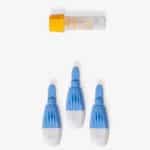
- IVD including Tubes and Lancets MHRA Registered
- Jump-the-queue option available for an additional £50.
- Insured and Free Replacement Kit if damaged.
- Money Back Guarantee
- Track24 Pre-paid Label Option for Delivery to Lab.
- Fruit Allergy evaluation result certificate sent to you by Confidential Email (No SMS).
- We provide support through WhatsApp during our business hours.
The Laboratory that processes your Fruit Allergy samples uses CE-certified special purpose high tech instruments and robotic machines supplied by some of the best medical technology suppliers. Many of these technologies are considered the latest in the industry. Some are regarded as more advanced than many other labs, as of 2025.
Login here in your Account dashboard.
Fruit Allergy – Delicious, tangy and Deadly!
For many people, an appointment with a specialized doctor takes a long time. I know this very well. It took me over three months to get an appointment with an allergist, and for 20 years, I had never had a specialist visit for food, pet, or environmental allergies, let alone an allergy test. I didn’t want to waste any of those 15 precious minutes when I finally got the appointment. Preparing for the appointment helped me make the most of my time with the allergist and reduce tension in anticipation of the doctor’s visit.
The preparation helped me make the most of that appointment and subsequent ones. I’m happy to say that, with the help of doctors, I’ve figured out what I’m allergic to now (instead of just knowing what I was allergic to 20 years ago) and have gained new confidence in living better with flour and meat allergies. I was able to reintroduce some foods into my diet and also better understand the severity of some of my food allergies.
After many visits to the doctor, I have perfected my preparation for appointments to optimise the time available. Here is a guide with an overview of the information to collect before the appointment and a useful document to print and fill out.
Step 1: Formulate the questions
The first thing to do is gather the topics to discuss with the doctor. When I’m sitting in the doctor’s office, I tend to forget at least half of the things I want to talk about. Does it happen to you, too? Or, suddenly, my problems don’t seem so important, so I downplay the symptoms. Sometimes, I even felt I shouldn’t ask some questions because they were obvious or frustrating. I don’t want to be a burdensome or inconvenient patient, a person incapable of managing the disease appropriately. Now, I realise this armour is unnecessary when confronting the doctor. Worries will not make you an inappropriate patient. They will make you an aware and responsible patient.
It is important to remember not to worry about doctor visits. Doctors are people like us, and they are on our side. If you are embarrassed about something, the solution is to think that the doctor has likely already encountered it in other patients.
But what questions should you ask your family doctor?
If you’re like me, you may want to discuss changes over time or learn more about possible treatments or food testing. The questions do not necessarily have to be medical, as a diagnosis implies a medical condition and a disorder that interferes with one’s lifestyle.
Therefore, asking about living with food allergies is legitimate. You may want to seek advice on school cafeteria safety or understand what precautions to take for food allergies while travelling. These visits can also be a time to discuss mental health and quality of life. The appointment with the doctor is when you can finally get answers, and it is therefore important to discuss things calmly.
Step 2: Take note of relevant medical history
In addition to asking questions, it is also important to write down your medical history and symptoms to food, pets, or any environment. It may also be helpful to bring relevant photographs (for example, pictures of rashes) to the appointment if necessary. The possible questions to ask the doctor will be directly linked to the problems for which the appointment has been scheduled. You can start from these to begin the discussion with the doctor. The more details you need to report, the better the picture the doctor can paint.
Do you need help organising your medical history? Answer a few questions to create a profile of your symptoms and prepare for your visit to your family doctor.
Also, make a list of all the medications and supplements you take.
The Dr. Itch Podcast contributor Payel Gupta asks all patients to take photos of their prescriptions and create an X-ray album on their phone. It is advisable to indicate the name and expiry date of each medicine. If you take vitamins or other supplements, be sure to include the list of ingredients.
Step 3: Conduct your research
Another part of preparing for an exam is doing your research. I would like to know the treatment options and technical terms I may encounter. Knowing some basic information can speed up your conversation with your doctor and ultimately help you make more informed decisions.
It is important to note that not all sources are equally reliable. Doctor Google could lead you to incorrect and alarmist information, so paying attention to the sources is essential. Organisations, associations and podcasts are the best sources to get information from. Regarding information not supported by facts, it is always a good idea to check whether the person speaking or writing has negative reviews or connections with companies or brands that could influence their opinions.
During the research phase
It is good to write down all the questions that come to mind. When discussing health, no topic should be off the table. We recommend asking about everything from possible treatments to symptoms and diagnosis. When presenting this information to the doctor, you need to discuss it and remember that having read several articles does not make the patient an expert.
Preparing for it with an open mind and a collaborative spirit is important to get the most out of your appointment. If the patient had already diagnosed the problem and established a treatment plan independently, the doctor would have very little room for action to do his job. Dr. Gupta suggests approaching the discussion with the doctor. Approach with this attitude: “I read this article that suggested this. What do you think?” It is better to avoid expressing oneself like this: “I have read this, and I want to proceed this way”.
There is a balance between being informed and being too aggressive.
Remember that we turn to the doctor for a reason and should trust and rely on him. It is important to find a doctor with whom you can establish a collaborative relationship. A fruitful conversation with your doctor will result in the right way to solve health problems.
Step 4: Bring your results with you
If diagnostic tests have already been carried out, such as specific IgE blood allergy and allergenic component tests, you must bring the results to your appointment. Test results are not easy to interpret on your own. Having the ability to review them with your family doctor is a significant advantage. Suppose the family doctor has already said that taking an IgE blood sample at the appointment will be necessary to monitor changes in the already diagnosed allergy. In that case, contacting the doctor’s office before the visit is advisable. Some doctors may ask for blood tests before your visit. This is so they can discuss the results in person and run any other tests together on the same day.
Other suggestions
• In doctors’ offices, it is often necessary to wait. It is, therefore, advisable not to make any other commitments immediately after the appointment.
• Doctors would also probably like to spend more time on each visit. If they interrupt the dialogue, you shouldn’t get angry. It is very likely that they have an idea of the problem and want to ask in-depth questions. Doctors do this daily and, like detectives, try to obtain key information quickly because time is of the essence.
Shipping and Return Policies
Appointment:
Missed appointments or cancellations less than 24 hours prior are not entitled to refunds. Rescheduling is possible but not guaranteed. Please contact the customer service prior to the appointment time to discuss cost and availability options.
Shipping & Return:
We have a 14-day return policy, which means you have 14 days after receiving your item to request a return.
To Qualify for any return, the product must be in the same condition as when you received it. Not used, not opened, unworn, in its original packaging. You will also need to send it to us with the receipt or proof of purchase.
Please return to: Medicines by MailBox, 89 Falcon Rd, London. SW11 2PF
You can read our full return policy here:
https://medicinesbymailbox.co.uk/return-policy/
We offer next day delivery; however courier delivery times are out of our control. We are unable to offer refunds for any late deliveries. But you will receive courier tracking information once your order has been dispatched. And orders placed by 1pm are dispatched on the same day.

















 Kiwi
Kiwi







Morgan A. –
Simple to order, easy to understand, and reliable results. Really glad I chose this option.
Audrey B. –
Had a positive experience with Medicines Online. Shipping was efficient, and results were delivered in a timely manner.
Paul G. –
There were a few issues with royal mail, but then it got solvedand the rest went well
Jonathan –
the kit is very easy to use
Gerald –
My results take a little longer to arrive, but customer service was very friendly
Charlie –
The kit took 2 days to get home, but it was very simple and easy to use
Laura –
It is a serious and professional company. I will recommend medicine online to everyone!
Carla –
Fast and simple
Tetynana Oliynyk –
Medicines online, in addition to delivering quick results, were very helpful with the doubts I had. I advise them!